The year 2025 marked a period of smooth operation for our team, during which we focused primarily on well-defined research lines and ongoing research projects. In this retrospective, we take a relaxed look back at these activities and highlight several interesting aspects of our team’s evolution throughout the year.
Team
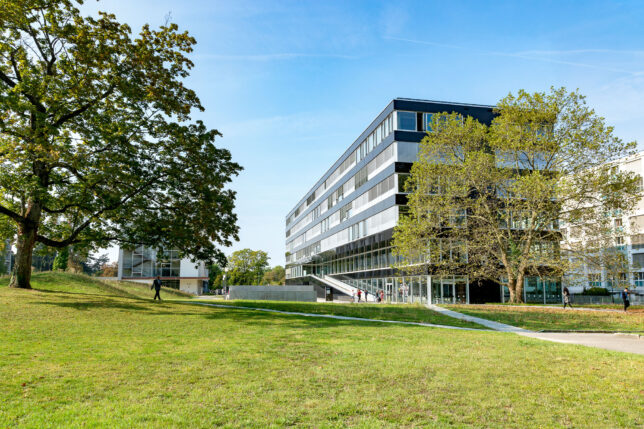
The DMML group has maintained its record-high team size of 14 members since 2023 and continued with the same overall composition as in 2024, engaging PhD students, research engineers, postdoctoral researchers, and professorial staff.

The only change during the year concerned roles rather than membership. Greg was promoted to Senior Lecturer and will continue expanding his teaching responsibilities while advancing research in his fields of interest, which in recent years have increasingly focused on Research Reproducibility and Open Science.
Research Projects
Once again, 2025 was marked by a high level of activity, with several ongoing projects, a number of completions, and a few new initiatives. Below, we summarize the main directions.
Newly obtained projects
The newly obtained projects are both in the direction of Open Data, and are led by Greg.
Dream FAIRer, is a small project funded by our institution that supports the consolidation of results from past research projects, with a particular focus on applying FAIR and FAIR4RS principles. Stay tuned for a FAIR-compliant release of the completed Libertas project outputs.

ROAD-TRIPIN, aka "Reinforcing Openly Accessible Data for Transparency and Reproducibility in Indoor Positioning and Indoor Navigation." Building on the strong collaboration established in CoORDinates, Greg continues “ROAD-TRIPIN with his five favorite allies”, his collaborators in the previous project and co-authors of works like ORDIP. The ROAD-TRIPIN project comes to help popularize these practices in said community, moving beyond the few motivated early adopters, and helping them become mainstream.
Active projects continuing in 2026:

- HYPER-AI, a bold attempt to make sense of how multiple learning agents think, act, and coordinate across the cognitive computing landscape.
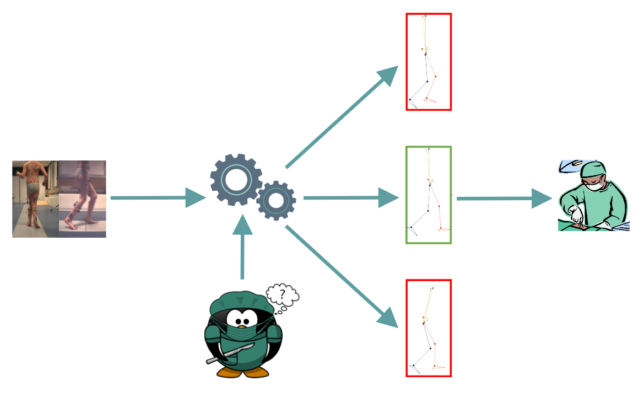
- Metathesis, where we model pathological gait with machine learning for treatment selection support, is a line continuing our work in SimGAIT .
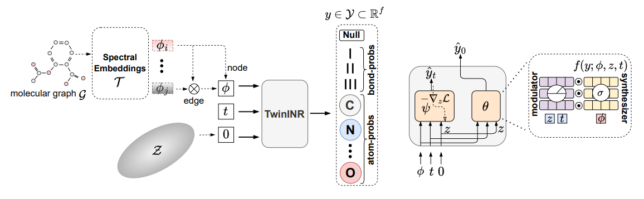
- Learning Generative Models for Molecules, a research line that started with the SMELL project, is now at the center of our interests!
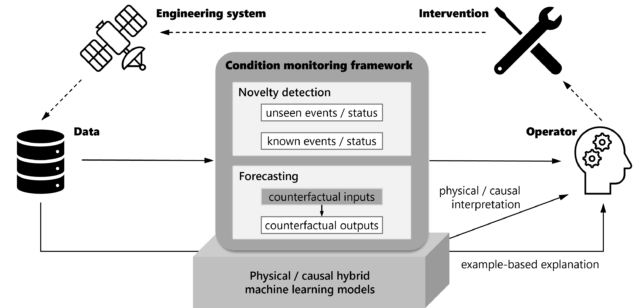
- Interpretable Condition Monitoring for Complex Engineering Systems, our project on Grey-Box modelling, continuing our synergies with our alumni Naoya and his institution in Japan!
- MIGRATE - A Multidisciplinary and InteGRated Approach for geoThermal Exploration, is our bold interdisciplinary project where we bring our abstract modeling ideas down to earth (I apologize for that, pun intended).
Projects completed during 2025:
Four projects were completed during 2025:
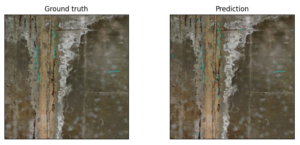
- Automated Bridge Defect Recognition, in which we developed annotation-efficient methods for effective bridge defect recognition.
- EO4EU, our large Horizon project, in which we developed annotation-efficient machine learning tools for Earth Observation applications, supporting the machine learning components of the project’s use cases. The project was completed at the end of 2025, and we look forward to further synergies in the Earth observation domain.
- And the two sibling projects CoORDinates and CoORDinance, the predecessor projects of ROAD-TRIPIN, that was described above.

Scientific Publications
Are you interested in the details of our research work?
What better way than by diving into the scientific publications we produced this year? Below you will find a list of both peer-reviewed publications (including conference and journal papers) as well as preprints, in which our team was involved during 2025.

- Gait Phase Importance in Affected Side Prediction for Cerebral Palsy via Gradient-Based Analysis : Uses interpretable machine learning to identify which parts of the gait cycle matter most when detecting the affected side in cerebral palsy. Our Gait analysis line is supported by the Metathesis project.
- Training-Free Stein Diffusion Guidance: Posterior Correction for Sampling Beyond High-Density Regions : Improves diffusion sampling so models explore interesting low-density regions instead of clustering around the obvious solutions.
- GLAD: Improving Latent Graph Generative Modeling with Simple Quantization : Makes latent graph generative models more robust by discretizing their representations. Sometimes simpler really is better.
- MING: A Functional Approach to Learning Molecular Generative Models : Introduces a functional perspective for training molecular generators, helping models propose molecules that actually make chemical sense. The research line on Molecules is always vibrant!
- Noise-Guided Transport for Imitation Learning : Reframes imitation learning through optimal transport, allowing models to learn effectively even from very limited expert demonstrations. Stepping up our Imitation Game!
- Hybrid Generative Modeling for Incomplete Physics: Deep Grey-Box Meets Optimal Transport : Combines physics knowledge and data-driven learning to model systems where equations alone fall short. We like moving in the Grey-Box zone!
- Simple and Critical Iterative Denoising: A Recasting of Discrete Diffusion in Graph Generation : Refines discrete diffusion for graph generation by adding a critic to keep denoising errors from spiraling out of control.
- ORDIP: Principle, practice and guidelines for open research data in indoor positioning : A systematic review of open datasets in indoor positioning. What exists, what’s missing, and how to share data so others can actually reuse it.
- Comprehensive Assessment of Open Science Practices in Indoor Positioning: Open Data, Code, and Material : This study evaluates the extent of the adoption of open science practices by systematically analyzing all reference papers of the IPIN conference from 2019 to 2024 editions. Are we sufficiently open, yet?
- DACCA: Distributed Adaptive Cloud Continuum Architecture : A Kubernetes-native architecture for orchestrating workloads across cloud, edge, and IoT, with multi-agent reinforcement learning and zero-trust security. Brought to you by the team of HYPER-AI.
These works were presented in some of the most relevant venues of their respective domains. Indicatively, ML works were presented at the AISTATS 2025, and the AAAI 2025 Conference. Our work on Gait modeling was presented in the annual ESMAC 2025 Conference of the European Society for Movement Analysis in Adults and Children (ESMAC), while the work in Geolocalization was published in the IoT Elsevier Journal and the domain-specific J-ISPIN Journal of IEEE.
Activities
Beyond research and teaching, members of the group continued contributing to institutional and community activities. Alexandros remains a member of the Conseil Participatif of HEG, while Greg is a member of the Conseil Participatif du Domaine Économie et Services.

It is our pleasure to share the fact that Van Khoa received the distinction of being listed among the top reviewers of the NeurIPS conference, in recognition of the rigor and care with which he reviewed submitted papers.
Our team participated in the AI for Good Summit 2025, held in Geneva. It was a great opportunity to engage with experts and stakeholders from diverse backgrounds and to present our work.
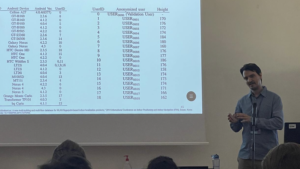
Lastly, Greg was invited to deliver a keynote at the International Conference on Localization and GNSS (ICL-GNSS 2025) in Rome, focusing on the importance of Open Science and Reproducibility in localization research.
Outro
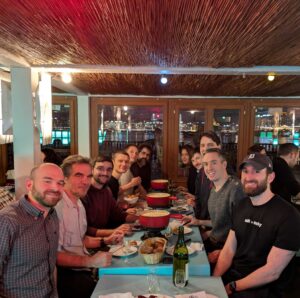
The year concluded with our traditional Christmas dinner. This time, we opted for an all-time classic: a Swiss Christmas fondue near Lake Geneva. It was a great opportunity to bring the team together and reconnect with old friends: cheers to Jason for joining us.
Looking ahead, we are excited about 2026 and anticipate a year full of inspiring teaching, transparent and truth-seeking research, work that is constructive for humans, and an open-arms attitude toward collaborations, new synergies, and fresh challenges.
We wish everyone a very Merry Christmas and a Happy New Year!

P.S.: You like tracking back the progress of the team? You may get a deep dive into the retrospectives of the previous years: 2019, 2020, 2021, 2022, 2023, and 2024 are all available here!